Add Row
Add Element
Exciting games on various electronic devices for ultimate entertainment.
update
Electronic Passion
update
Add Element
  • Home
  • Categories
    • Smartphones
    • Laptops & Tablets
    • Wireless Earbuds & Headphones
    • PC and Video Game Consloes
    • Smart TVs & Streaming Devices
    • Chargers & Charging Cables
    • Power Banks & Portable Chargers
    • Bluetooth Speakers
    • Computer Peripherals
    • Car Electronics
    • Home Automation Devices
    • PC and Console Video Game News
    • Video Game Movies
    • New and Old electronics news
    • Electronics Deals
May 28.2025
3 Minutes Read

MindsEye: The Battle Against AI, Bots, and Bad Reviews

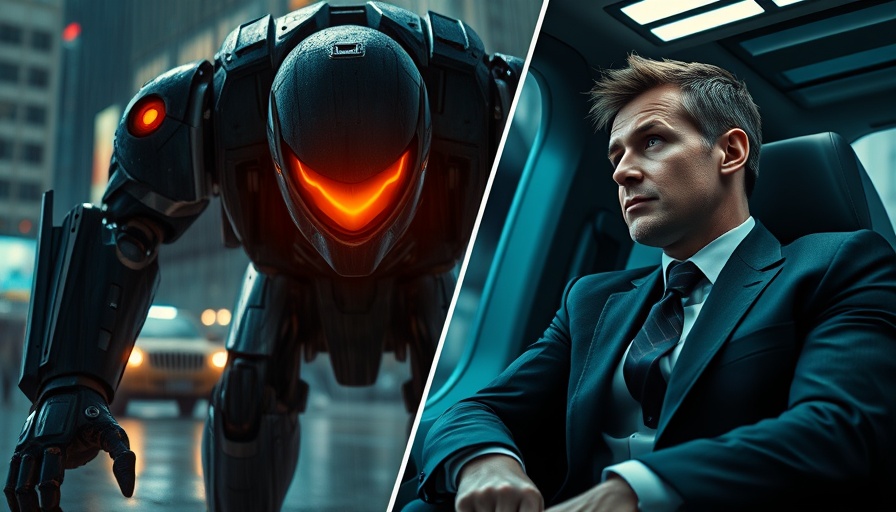
Futuristic robot and thoughtful man in MindsEye game controversy.

The Controversial Rise of MindsEye

As the gaming landscape continues to evolve, new titles emerge that push boundaries and stir conversations. One such title is MindsEye, an action thriller with GTA and Cyberpunk vibes, where players engage in a frantic shootout against malevolent AI robots. Yet, what’s perhaps equally captivating is the unfolding drama surrounding its reception, where claims of "concerted efforts" to defame the game come to light.

A Narrative of Suspicion

Developed by Build A Rocket Boy, a studio led by former Rockstar North president Leslie Benzies, MindsEye has garnered attention not only for its gameplay but for its co-CEO Mark Gerhard's controversial remarks regarding its critics. In a discussion on Discord, Gerhard hinted at the existence of financial backing behind negative criticisms directed toward MindsEye. "Do you think that all the people who reacted negatively were financed by someone?" he posed rhetorically, responding affirmatively, and suggesting that it was an obvious notion to consider.

Such a statement stirred the gaming community, challenging the ethics of game promotion and review integrity. Gerhard’s words echo a broader concern in the industry about authenticity and manipulation, especially in a time when digital influence significantly shapes public perception.

Understanding the Editor's Perspective

The gaming industry's dependency on online reviews and player feedback makes the stakes incredibly high. Critics, whether individuals or bot farms, wield significant power in crafting or crumbling a game’s reputation. Gerhard further clarified his views by specifying that he wasn’t accusing any individual influencer of wrongdoing but rather suggesting that "there are bot farms posting negative comments and dislikes." These assertions highlight the intricate interplay between genuine critique and orchestrated defamation, a duality that is increasingly prevalent.

Engaging with the Community's Response

As minds engage in heated discussions, fans have taken to social media to voice their opinions. Many echo Gerhard's sentiments, concerned over the authenticity of their online interactions. On the other hand, some content creators are apprehensive, with implications that they could be mischaracterized as part of this alleged smear campaign against MindsEye.

This presents a unique dilemma. Gamers often question the motivations behind peer reviews and whether these opinions are authentic or influenced by external forces. What Gerhard's statements accomplish is a spotlight on these dynamics, provoking deeper conversations about transparency and community trust in the gaming world.

Counterarguments in the Industry

While some support Gerhard's claims, others caution against jumping to conclusions. Critics point out that many games face backlash from genuine feedback and that attributing negative reviews to organized campaigns can undermine legitimate player concerns. In the cyclical nature of the gaming discourse, what emerges is a complex narrative where developers, critics, and players interact in a manner that is often less than straightforward.

Future Predictions and Opportunities for MindsEye

Despite this controversy, MindsEye, set for release on June 10, holds promise. As the game inch towards launch, the real challenge will be how Build A Rocket Boy can convert this discussion into strategic marketing opportunities. There is a rare chance here for the studio to recover the narrative by fostering an authentic connection with the gaming community. Engaging directly with players through open forums and emphasizing genuine feedback could help restore trust.

Moreover, should MindsEye succeed, its trajectory could provide important lessons for future game developers on navigating the very landscape Gerhard highlighted—a space where authenticity can be both a strength and a vulnerability.

Conclusion: Embracing the Digital Age's Complexity

The conversation surrounding MindsEye illustrates a critical crossroads in the gaming industry—where developers must adapt to shifting tides of player perception interwoven with the complexity of digital communication. As players gear up for the game's release, the focus will not just be on gameplay but also on how this title can redefine its narrative in the gaming community.

Are you ready to jump into the world of MindsEye? Make sure to keep an eye out for its official release and join the conversation.

PC and Console Video Game News

1 Views

0 Comments

Write A Comment

*
*
Related Posts All Posts
02.21.2026

Is Xbox Dead? Unpacking the Brand's Alarming Decline

Update The Slow Fade of Xbox: A Long GoodbyeFor anyone who has followed the gaming industry closely, the recent news surrounding Xbox has felt like a prelude to a funeral. With the departures of Phil Spencer and Sarah Bond, the once-pioneering gaming platform appears to have lost its way. The trajectory of Xbox reflects a broader trend within the gaming landscape, where brands must evolve rapidly to survive. As the new leadership takes the reins under Asha Sharma, a former Meta executive, many gamers are left wondering what the future holds for this iconic brand.A History of MisstepsThe story of Xbox's gradual decline can be traced back several pivotal moments. One of the most significant was its acquisition of Activision Blizzard for a staggering $70 billion. Initially hailed as a strategic move to bolster Xbox's gaming portfolio, it instead created an enormous burden. With that purchase, Xbox transformed from a niche gaming console into a major publisher with vast liabilities. Suddenly, the pressure was on to deliver blockbuster success. Launching exclusive titles was no longer the goal—rather, it became about how many platforms could support these franchises.Consoles vs. the Cloud: A Paradigm ShiftXbox's transition away from focusing on console sales signals a radical shift within the industry. Even if you love games like Halo or Gears of War, the reality is stark: you don’t even need an Xbox to play them anymore. Options like Game Pass and cloud streaming have made Xbox games accessible on different devices, which may liberate gamers but ultimately dilutes the brand’s identity. As Kotaku pointed out, once a console brand stops selling consoles, it might be time to acknowledge that the essence of Xbox is changing irrevocably.The Rise of AI: A Double-Edged SwordMicrosoft's heavy investment in artificial intelligence further complicates the picture. Rather than amplifying the gaming experience, the shift towards AI integration has felt disjointed at best. As Asha Sharma steps into her new role, speculation grows about how she will steer Xbox in a landscape increasingly dominated by technologies that prioritize cloud computing over traditional gaming.Crisis of Identity: The New Xbox LeadershipThe appointment of Asha Sharma raises significant questions regarding Xbox's future direction. With no prior gaming industry experience, many wonder whether she is merely a placeholder until Microsoft finalizes plans to downscale its gaming ambitions. Amid a reshuffling that prioritizes technology over tradition, the focus seems to shift away from the gamer-centric approach that defined Xbox in its heyday.What Lies Ahead?As we gaze into the future, the question looms: can Xbox reinvent itself in a manner that resonates with gamers? There’s speculation about a broader convergence of gaming and AI, potentially ushering in a new era in interactive entertainment. However, if history has taught us anything, it’s that failing to appreciate the roots of gaming culture will only lead to more turmoil.Conclusion: A Call to ActionAs gamers, technology enthusiasts, and industry observers, it’s crucial to remain vigilant and discerning. Whether through supporting indie games, voicing opinions on industry developments, or simply engaging with the community, every action contributes to shaping the future of gaming. Keep your eyes peeled on what unfolds as we navigate this evolving landscape.

02.20.2026

Nioh 3 Surpasses 1 Million Sales: A Milestone for Action RPG Fans

Update The Unprecedented Success of Nioh 3Authoritative figures in gaming often predict success based on trends and patterns, and Nioh 3 has proven those predictions right by emerging as the fastest-selling title in the franchise's history. Just two weeks post-launch, this action RPG has passed over a million copies sold globally on both PC and PlayStation 5, which is not just a significant milestone for Nioh but a testament to Team Ninja's ingenuity.Before its release, excitement surrounding Nioh 3 seemed palpable. Various gaming forums buzzed with chatter, fueled by a much-praised free demo that showcased approximately the first ten hours of gameplay, leading gamers to not only anticipate its launch eagerly but also to engage with it in unprecedented numbers.Factors Contributing to Nioh 3's Record SalesSeveral elements played a crucial role in Nioh 3's impressive sales figures. For one, its marketing strategy capitalized on word-of-mouth momentum and a carefully orchestrated demo release. Unlike its predecessor, which took over a year to hit two million copies, Nioh 3 has catapulted to one million sold in an incredibly short timeframe, proving its draw is more widespread than previous entries.The game offers a semi-open world characterized by expansive maps that depict different historical periods in Japan, an innovation that greatly appeals to both new and returning players. This geographical and temporal variety enhances the overall gaming experience, creating a compelling atmosphere that invites exploration and discovery.Player Engagement: A New FrontierOn Steam, Nioh 3 has also set records for player engagement, surpassing the previous high for concurrent players in the series. The peak count of 88,045 concurrent players on Steam is doubly impressive, reflecting the gamers’ desire for a challenge as they navigate the game’s intricate mechanics.Through word of mouth fueled by its playable demo, many players who weren't previously enthusiasts of the Nioh series found themselves drawn into its immersive world. As indicated by the surge in both sales and player engagement, even those who were new to the series have found a compelling entry point.The Evolution of Nioh and What Lies AheadNioh 3 not only builds on the successes of its predecessors but also sets the stage for the potential evolution of the series. With franchise sales now exceeding 10 million, the success of this title raises the possibility of future installments that could further expand on the rich historical narratives and complex mechanics that define the Nioh universe.The future of Team Ninja could hinge on this trajectory: as players respond positively to the innovations rolled out in Nioh 3, developers could look to integrate even more expansive gameplay elements and narrative depth moving forward. Continuous participation from the community will undoubtedly influence the game's evolution and the themes explored in potential sequels.Nioh 3: A Community-Driven ExperienceThe importance of community engagement cannot be understated when analyzing the success of Nioh 3. Collaborative gameplay options, such as co-op play, foster a sense of camaraderie and community among players, ultimately enhancing the gaming experience. This element, coupled with the rich aesthetic and gameplay depth of the Nioh series, allows players to enjoy a connected experience that fosters not just competition but teamwork.Having built a vibrant community around its engaging gameplay, Nioh 3 offers players an avenue for shared achievements and exploration, making it more than just a singular gaming experience.Conclusion: An Invitation to ExploreNioh 3’s success is a clear indication of its impact on the gaming industry, drawing in new players while satisfying long-time fans. With its innovative mechanics and expansive setting, it inspires all to immerse themselves in this latest chapter of the Nioh saga. Whether you’re a seasoned player or a newcomer, the world of Nioh 3 awaits—be sure to join in on the action and bring a friend, as the journey through its challenges is best shared. Embrace the adventure and become part of the thriving community that elevates this franchise to new heights.

02.19.2026

Artur Ganszyniec Calls The Witcher Ending a Mistake: Here's Why

Update Behind the Scenes: The Witcher’s Controversial Ending Explained The world of video games is rich with narrative depth and unexpected twists, especially within beloved franchises like The Witcher. Recently, Artur Ganszyniec, the lead story designer for the original The Witcher, opened up about a crucial aspect of the game that many fans may find surprising. During his recent playthrough, Ganszyniec revealed that he and his story team were not involved in the closing cutscene of the game, which he now considers a mistake. A Twist That Set the Stage This twist in the narrative direction stemmed from a decision made by someone at CD Projekt Red who believed the game needed an additional animated outro. The result? A cutscene that diverged from the original narrative intent and shaped the trajectory of The Witcher 2: Assassins of Kings in one of the most politically charged ways imaginable. Ganszyniec reveals that the original ending was intended to leave players hanging with an open question about Geralt's future. Instead, by implementing an animated outro without the input of the story team, the game locked Geralt into political intrigue that diverged from the more personal storytelling showcased in the first installment. By adding a definitive conclusion where Geralt saves King Foltest, the team inadvertently dictated a much more rigid storyline for the sequel. Political Intrigue vs. Personal Discovery The screenplay of the animated outro contradicts the spirit of the game's original ending, forcing Geralt into a narrative filled with political machinations rather than simpler, more intimate explorations of character development. Ganszyniec expressed concern that this shift left less room for exploring Geralt's background, relationships, and personal motivations.  Critics have often pointed to the political elements of the second game as a strength, providing multifaceted moral dilemmas and a mature exploration of conflict. Still, fans of the original game often reminisce about the more personal narrative style, emphasizing character over chaos. Thus, the decision surrounding the ending of the first game had profound implications for the storytelling that followed. The Evolution of The Witcher: Reflections and Remakes This discussion is particularly relevant as CD Projekt Red prepares for the remake of The Witcher, which has sparked interest and excitement within the gaming community. Ganszyniec's insights may have a bearing on how the remake will balance the need for plot cohesion while keeping the emotional connections that fans loved in the first game. As the sequel's path became politically charged, will the remake find a way back to its roots? Ganszyniec is optimistic, voicing hope for a successful retelling of the iconic story. The remake is being developed using Unreal Engine 5, promising cutting-edge graphics married with an engaging narrative. As Ganszyniec noted with excitement, a new iteration of The Witcher allows for re-exploration and reinvention of its foundational themes. Could this be the opportunity the series needs to recapture the essence of personal storytelling while also presenting audiences with fresh engagement? Conclusion: The Importance of Narrative Control The insights shared by Ganszyniec highlight a significant truth in game development: the importance of narrative control and cohesion. As the industry continues to evolve, where storytellers traditionally take a backseat to gameplay mechanics and technology, this interview serves as a reminder of the unique art of storytelling in video games. While the path forward for The Witcher may hold uncertainties, engaging narratives can be the guiding force to create memorable experiences. If you are a fan of gaming narratives and excited about the potential direction of the remake of The Witcher, staying informed about the evolving landscape of the gaming industry is vital. Let the journey of storytelling lead you to explore a richer gaming culture that values narrative depth!

Terms of Service

Privacy Policy

Core Modal Title

Sorry, no results found

You Might Find These Articles Interesting

T
Please Check Your Email
We Will Be Following Up Shortly
*
*
*